Germany's First Operational CO2 Export Terminal
CarbonBridge is poised to be more than just Germany’s first operational CO2 export terminal – it aims to be a versatile provider of CO2 logistics solutions. Whether it’s storage, transport, or loading, we tailor our services to meet your individual requirements, ensuring flexibility and efficiency every step of the way.
Efficient CCS Logistic with CarbonBridge
Ambrian Energy is sponsoring the development of CarbonBridge, Germany’s first operational CO2 Export Terminal. This state-of-the-art energy infrastructure project is designed with scalable capacity to meet future demands.
Strategically located on our premises in Bremen adjacent to our existing hub, our CO2 export hub offers excellent connectivity to the national railway network, ensuring seamless access from across the German hinterland. Our location facilitates efficient and reliable transportation routes, making CarbonBridge a central link in Germany’s carbon management network.
CarbonBridge is not just a CO2 hub; it’s a commitment to a greener tomorrow. Leveraging Ambrian Energy’s more than 50 years of expertise in hazardous and liquid goods handling and logistics management, we offer a comprehensive suite of services through CarbonBridge. These include CO2 loading and unloading, rigorous testing, and intermediate storage solutions meticulously tailored for emitters in hard-to-abate industries like cement production, waste incineration and lime manufacturing.

An Ambrian Energy Project -
We are building the green infrastructure of tomorrow
Ambrian Energy is a reliable, family-owned partner with over 50 years experience in the procurement, processing and distribution of innovative, sustainable and high-quality fuels located in Bremen right along site the port.
Just as we have always played an active role in shaping the energy markets with innovative strength and new product ideas, we will continue to do so in the market for CCS.
Only one thing will remain the same in the future: our reliability and the high degree of flexibility with which we can find the right solution for every task.
Leveraging our expertise and equity to fund CarbonBridge with only one goal in mind: Becoming more sustainable together
What is CCS?
(Carbon Capture Utilization & Storage)
Carbon Capture and Storage (CCS) is a critical process designed to mitigate climate change by capturing carbon dioxide (CO2) emissions at their source and safely storing them underground. This prevents CO2 from reaching the atmosphere and contributing to global warming. CCS is particularly vital for carbon-intensive and hard-to-abate industries striving to achieve carbon neutrality by 2050, as outlined in the European Green Deal.
Carbon Bridge in the CCS Value Chain

CO2 emissions are primarily generated from industrial processes or power plants. These sources produce significant amounts of CO2 that need to be managed to mitigate environmental impact.
At the point of emission, CO2 is captured using technologies that separate it from other gases. The captured CO2 is then liquified and stored temporarily at a local facility.
From the local storage, the liquified CO2 is transported to a central CO2 hub. This transportation can be facilitated by rail, pipeline, or vessels, ensuring efficient movement of CO2.
The CO2 hub acts as an intermediate storage facility where CO2 is temporarily held before further transportation. This hub streamlines connections and prepares CO2 for the next phase of its journey.
CO2 is then transported from the hub to offshore storage facilities. Flexible transport routes, such as pipelines or vessels, are essential for ensuring smooth and efficient delivery.
Finally, the CO2 is injected deep underground into geological formations like depleted oil and gas fields or deep saline aquifers. This secure storage prevents CO2 from escaping into the atmosphere.
CO2 emissions are primarily generated from industrial processes or power plants. These sources produce significant amounts of CO2 that need to be managed to mitigate environmental impact.
At the point of emission, CO2 is captured using technologies that separate it from other gases. The captured CO2 is then liquified and stored temporarily at a local facility.
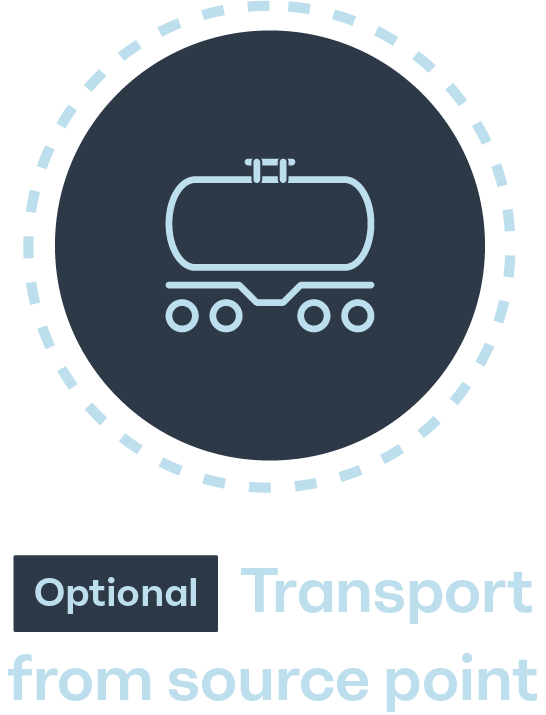
From the local storage, the liquified CO2 is transported to a central CO2 hub. This transportation can be facilitated by rail, pipeline, or vessels, ensuring efficient movement of CO2.
The CO2 hub acts as an intermediate storage facility where CO2 is temporarily held before further transportation. This hub streamlines connections and prepares CO2 for the next phase of its journey.
CO2 is then transported from the hub to offshore storage facilities. Flexible transport routes, such as pipelines or vessels, are essential for ensuring smooth and efficient delivery.
Finally, the CO2 is injected deep underground into geological formations like depleted oil and gas fields or deep saline aquifers. This secure storage prevents CO2 from escaping into the atmosphere.
Key Benefits of CarbonBridge
- Easier and faster start of hub operations thanks to lower volume requirements, with no dependency on pipelines or other 3rd parties.
- The entire project is situated on land owned by Ambrian Energy within Bremen's industrial port next to the existing Ambrian facilities.
- The facility will feature a fully dedicated train unloading structure, enabling rapid train turnarounds and optimised operations.
- The hub will include up to 55,000 cubic meters of dedicated storage capacity, with the flexibility to expand as needed.
- A jetty with a 10.5-meter draft will accommodate larger vessels in the future, increasing operational efficiency and throughput.
- Future proof with scalable capacity and provisions for future pipeline connection points have been integrated into the design to ensure long-term adaptability.
Why is CarbonBridge the right partner for you?
Leveraging Rail Connectivity
Transporting captured CO2 is a significant challenge. Although pipeline network plans exist, commercial commissioning faces delays due to lengthy permitting processes, extended construction timelines, and substantial investments.
Rail Transport Solution: Rail transport can bridge the gap left by the lack of pipeline infrastructure. It offers a more flexible and faster solution than pipelines, leveraging existing railheads and infrastructure. The city of Bremen has a well-connected railway network that can be utilized immediately, accelerating the timeline for realizing CO2 inbound transport to CarbonBridge. Further, at Ambrian, we are experts in railway transport and can always ensure precise metering and safe unloading of CO2 from tank wagon trains.
Flexible Ship Loading Facilities
From storing CO2 in the 55,000 cubic meter tank at CarbonBridge, the C02 needs to be transported to the offshore sequestration site via vessel.
Flexible Vessel Loading: Our facility is capable of handling various ship sizes up to 30,000 tons. A dedicated jetty with a 10.5-meter draft will accommodate larger vessels in the future, enhancing operational efficiency and throughput. This flexibility will enable CarbonBridge to manage different ship sizes, effectively catering to our clients’ diverse fleets.
Expertise and Experience
With a solid track record in fuel distribution, we bring our knowledge of handling dangerous products to the forefront of the CarbonBridge project.
A Reliable Partner
Ambrian Energy is family-owned business with over 50 years of experience in hazardous and liquid goods handling and logistics, and we are set to make the CarbonBridge project a reality in Bremen. Leveraging our experience, financial strength, and strategic land ownership, we will connect CO2 emitters with permanent storage providers.
Strategic Land Ownership and Location
Our established hub at the
Bremen port, coupled with adjacent land ownership, reduces investment costs and expedites project implementation.
Quick Summary
The CarbonBridge project leverages Bremen’s strong rail connectivity to offer a flexible and fast alternative to delayed CO2 pipeline infrastructure. With extensive experience in hazardous goods logistics, Ambrian ensures safe and precise C02 handling via rail. At the port of Bremen, owned land and an adaptable ship loading facility — handling vessels up to 30,000 tons — enable efficient transfer to offshore storage. This strategic setup allows for rapid implementation and reliable operation.
Contribution to the
developement of the city of Bremen
- Carbon Capture Necessities
Without carbon capture, Germany’s net-zero goals are unlikely to be achieved. CO2 emissions from hard-to-abate industries must be captured and either reused or stored permanently. Mature carbon capture technologies are available today, and numerous permanent CO2 storage sites are under development in Northern Europe, primarily in the North Sea. However, a CO2 hub is essential to facilitate the transportation of emissions from their sources to sequestration sites.
Green infrastructure leadership: With CarbonBridge, Bremen will host a state-of-the-art carbon infrastructure project enabling the success of CCS in Germany. This hub will establish Bremen as a key location in the future of carbon logistics, positioning the city prominently on the map.
- Economic Growth and Development
The CarbonBridge project in Bremen is set to increase economic growth. By turning underutilised land into a CO2 hub, we breathe new life into these spaces and stimulate the local economy.
Industrial Brown Field Utilisation: Transforming old industrial sites into active centres of productivity.
Harbour Development: The construction of the CO2 hub will contribute positively to the development of Bremen port. Port fees will additionally benefit the cities’ economy.
Revenue Generation: As the business grows, corporate taxes will help fund public services and infrastructure.
- Quality Employment and Local Value
Ambrian Energy, a reputable family-owned business, will foster a supportive work environment for its employees, create new jobs and thereby also create societal value for the local community.
Ambrian Energy: Known for being a dependable and trusted employer, Ambrian Energy offers a nurturing and supportive workplace.
Job Creation: New, highly qualified jobs will provide opportunities for Bremen’s residents by Ambrian Energy
Local Value Creation: The project will boost local value through active business engagement, community involvement and employing local contractors.
- Environmental Standards
We are committed to maintaining high environmental safety standards. With first-class safety protocols, we ensure the least possible environmental impact.
We actively reduce noise and light pollution and assure minimal emissions.
Safety Standards: Implementing top-tier safety measures to protect the environment and minimize impact.
Environmental Protection: CarbonBridge’s priority is to protect the environment and positively contribute to a greener future.
Building Bridges to a Net-Zero Future
Carbon Capture in a Sustainable Future
Carbon capture is emerging as a pivotal tool in the global effort to decarbonize industries. Under the ambitious framework of the EU Green Deal, industries are tasked with achieving net-zero greenhouse gas emissions by 2050. This is particularly challenging for hard-to-abate sectors such as cement production and waste incineration, where decarbonization is crucial for meeting the Green Deal’s targets.
As stated by the International Energy Agency (IEA) in 2020, “CCUS is the only group of technologies that contributes both to reducing emissions in key sectors directly and to removing CO2 to balance emissions that cannot be avoided – a critical part of ‘net’ zero goals.”
Carbon capture works by trapping carbon dioxide (CO2) emissions from hard to abate industries before they enter the atmosphere, thus playing a vital role in mitigating climate change and alleviating the impact of fossil fuel combustion.
What CarbonBridge will contribute
CarbonBridge is set to play an indispensable role in the carbon capture and storage (CCS) value chain. Once CO2 is captured, it needs efficient transportation from its point of origin to offshore sequestration sites.
CarbonBridge fulfills this need by facilitating safe and carbon-neutral CO2 transport via rail, before loading the captured carbon onto ships for its journey to storage sites, where it is stored safely underground.
Ensuring Safety and Sustainability
Research indicates that the CCS value chain is considered safe, with a low risk of leakage. Findings from Helmholtz in 2025 suggest that annual CO2 leakage could be minimal, occurring mostly at old boreholes but preventable with proper cementing techniques. The likelihood of leakage is highest during the injection process in to the sequestration sites offshore, but pressure stabilizes once the site is closed, allowing CO2 to gradually dissolve in the geological formation’s water over centuries.
Infrastructure to transport and store CO2 safely and reliably is essential for rolling out CCUS technologies (IEA, 2020). The comprehensive studies by Helmholtz affirm that with thorough adherence to safety protocols and regulations, environmental risks are substantially minimized.
At CarbonBridge, we aim for the highest safety standards, striving for a neutral environmental impact through our operations. This commitment ensures that we not only advance technological innovation but also uphold responsibility towards our planet’s future.
Sources:
International Energy Agency (IEA). (2020). CCUS in Clean Energy Transitions: Special Report on Carbon Capture, Utilisation and Storage. Paris: IEA.
https://www.iea.org/reports/ccus-in-clean-energy-transitions
Helmholtz Climate Initiative. (n.d.). Mitigation – Projects. Retrieved July 23, 2025, from https://helmholtz‑klima.de/en/
Layout Details
- CarbonBridge will have three parallel unloading tracks
- Each track will be able to unload 18 railcars simultaneously
- Unloading operations for a full train of 36 railcars will be completed in under 4 hours
- Operations will run 24/7
- Maximum daily unloading capacity: 12.500 cbm
-
Max unloading capacity per year:
>3 mln cbm
Visualization of the future CarbonBridge site
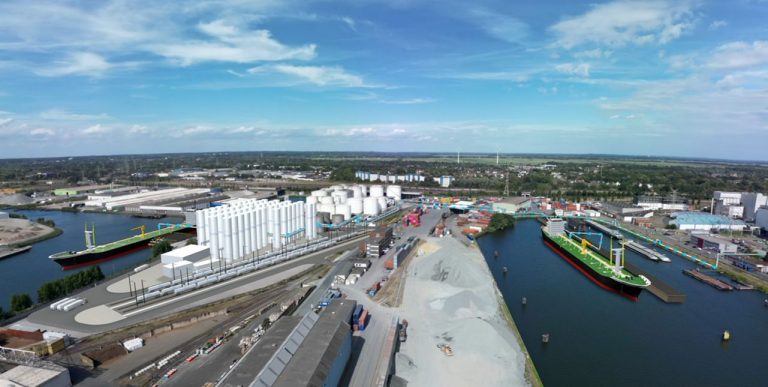
Unloading tracks
Carbon Storage
Jetty
Jetty
Location of CarbonBridge
Bremen is the most southern seaport in Germany and well connected to the German railway system. CarbonBridge is located close to several large staging track areas offering efficient buffering for incoming and outgoing trains.
CarbonBridge Services
Package 1
Excluding on-shore transportation to Bremen

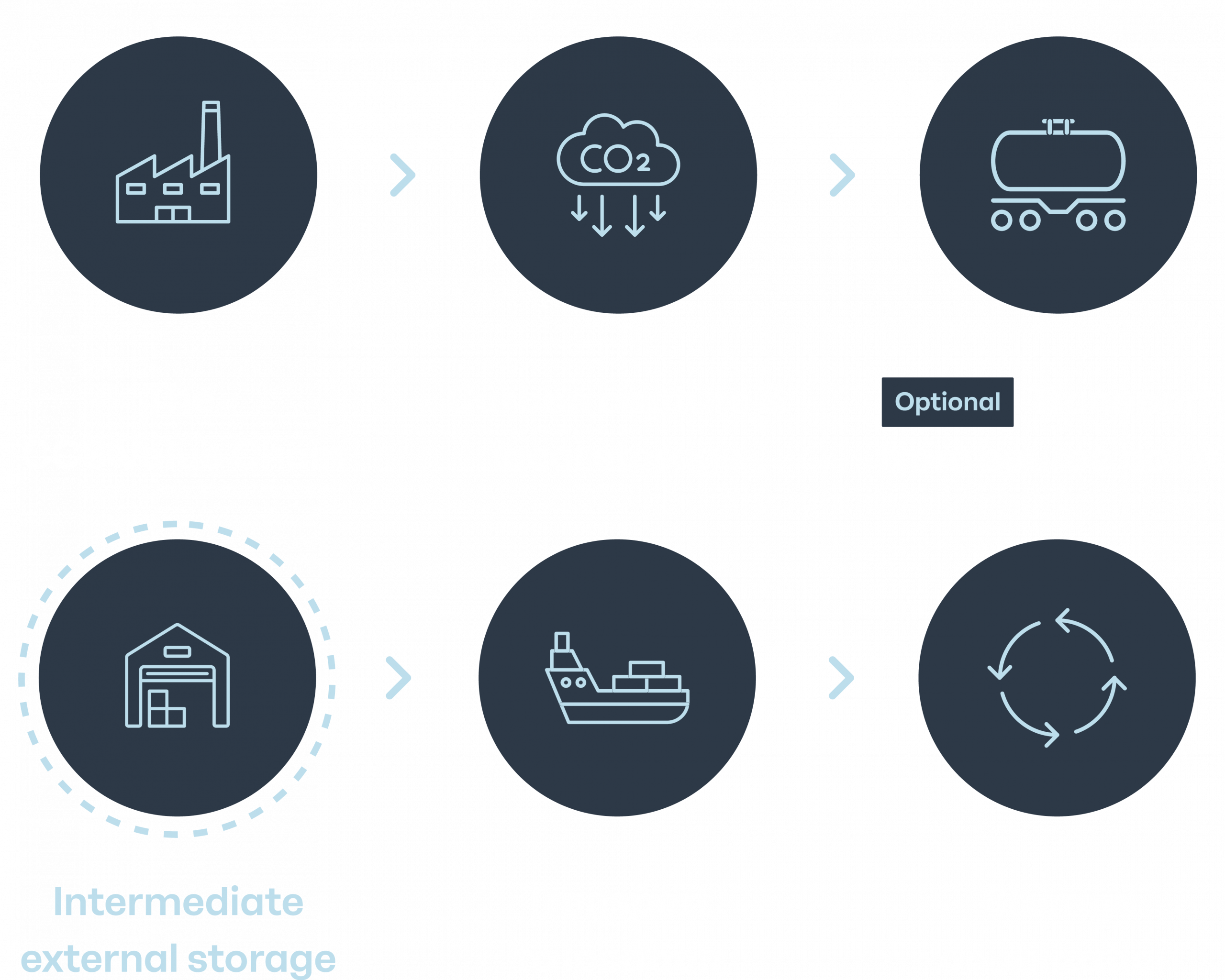
Included Services:
Testing and unloading the trains DAP Bremen, intermediate CO2 storing including cooling, sea cargo loading FOB Bremen.
Client Responsibilities:
Manage railway logistics to transport CO2 to Bremen and arrange seagoing cargo.
Package 2
Including on-shore transportation to Bremen

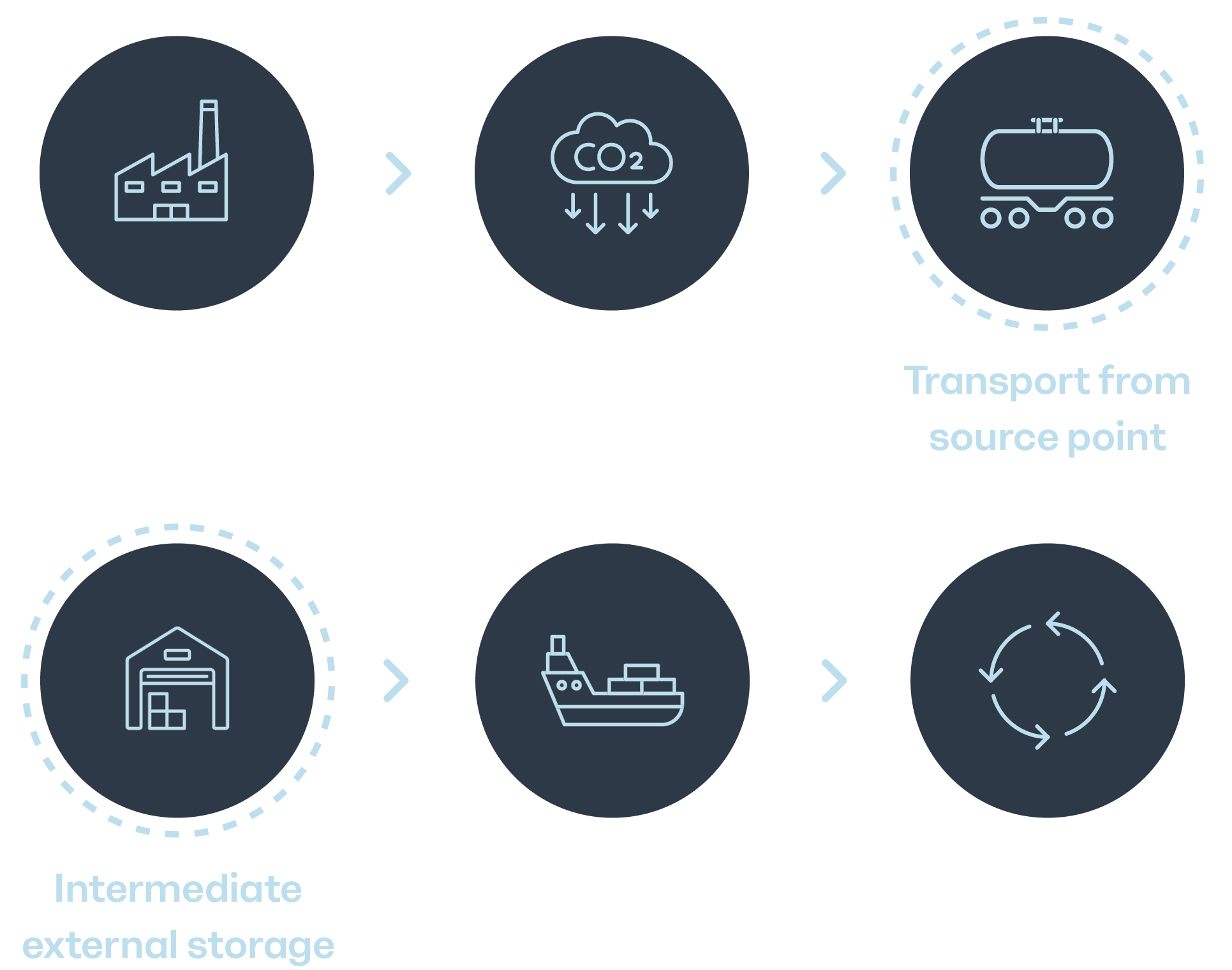
Included Services:
On-shore transport management to Bremen FCA Client’s Location, intermediate CO2 storing including cooling, sea cargo loading FOB Bremen.
Client Responsibilities:
Metering, inspection and loading of CO2 onto the train and arrange seagoing cargo.
Always included
-
Storage Site Selection:
Offer consultation on selecting appropriate storage sites. -
Railway and Off-shore Operations:
Provide expert guidance on managing logistics, including specific requirements for loading arms. -
Necessary Documents:
Supply essential documents, such as test results, for CRD- and BECCS crediting. -
Direct Communication:
Assist with direct communications with storage facilities and shipyards to ensure smooth operations.
Logistic Solutions
- Inbound Transport by Rail
- Outbound Transport by Ship
- In the future: Transport by Pipeline
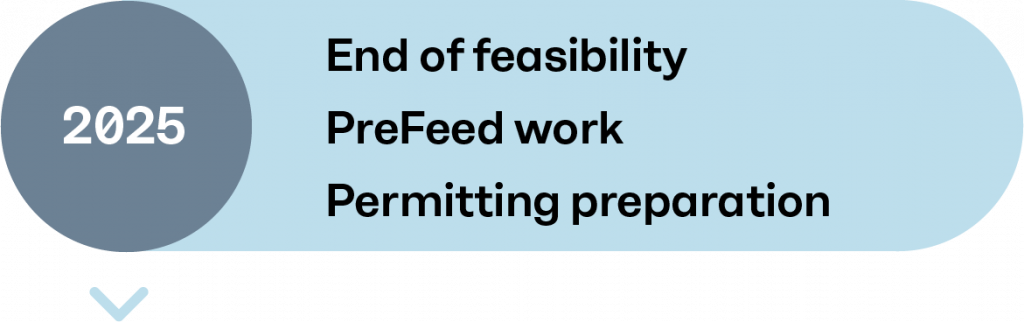
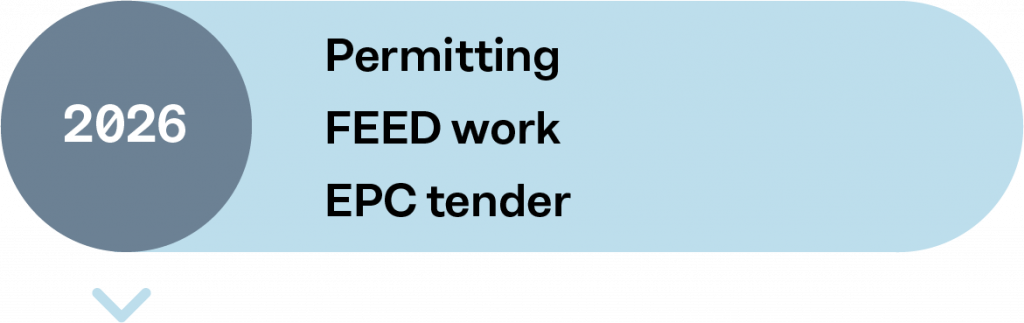
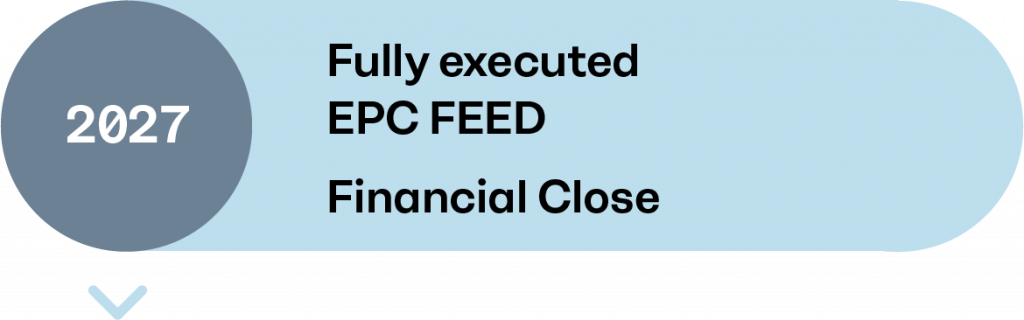
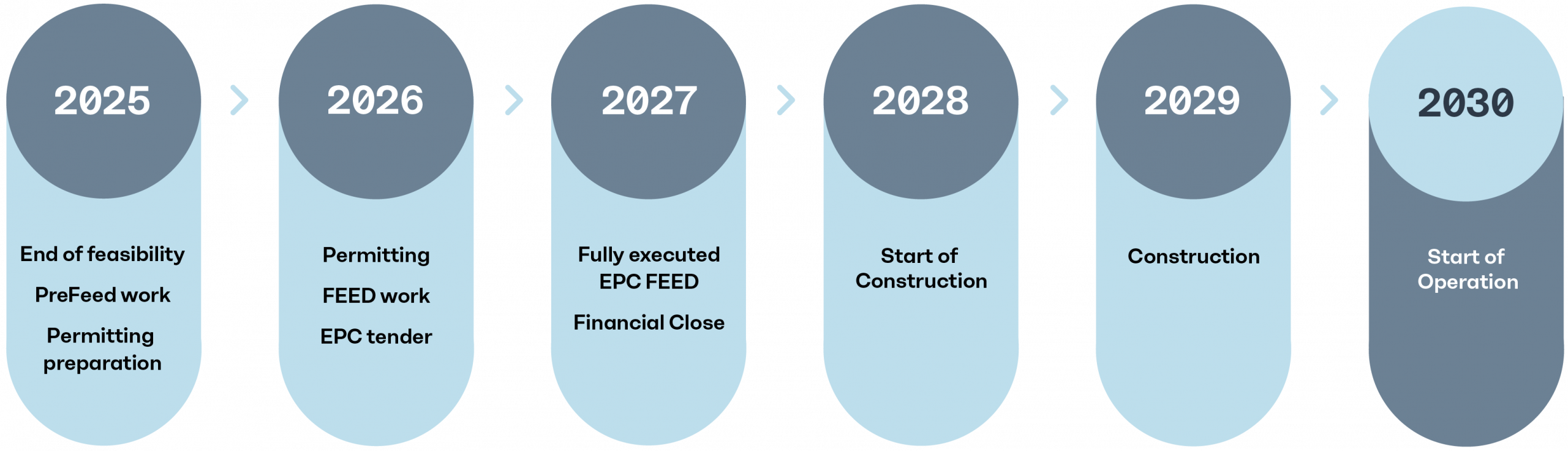
Timeline of CarbonBridge

Got questions?
We’ve compiled the most common questions about CarbonBridge, CCS technology, and what makes our project unique.
What is CCS and why is it important?
CCS stands for “Carbon Capture and Storage”. It’s a technology designed to capture and store CO2 emissions from industrial processes and power generation before they reach the atmosphere. CCS is crucial because it helps mitigate the impacts of climate change and supports the transition to a low-carbon economy.
How does CO2 storage work?
CO2 storage involves two main steps: First, CO2 is captured directly from sources like power plants or industrial facilities. Second, the captured CO2 is safely stored in underground geological formations, such as depleted oil and gas fields or deep aquifers. These storage sites are carefully chosen to ensure that the CO2 remains securely trapped.
Which industries benefit from Carbon Bridge?
Industries that can particularly benefit from Carbon Bridge are those with high CO2 emissions and limited options for emission reductions. These include energy generation, cement production, steel manufacturing, the chemical industry, and refineries. By using CCS technologies, these sectors can improve their environmental footprint and meet regulatory requirements.
How safe is CO2 storage?
CO2 storage is considered safe when carried out in controlled geological formations, complemented by rigorous monitoring systems that prevent unwanted leaks or releases. Extensive research and practical experience support the safety of CO2 storage. Additionally, all processes are overseen and regulated by national and international guidelines.
When does operation start?
The CCS facility is scheduled to begin operations in 2030. Before launching, comprehensive tests and evaluations are conducted to ensure all systems and processes operate efficiently and safely.
Is CarbonBridge authorized to construct and operate the CO2 Terminal in Bremen?
CarbonBridge will obtain all necessary construction and operating permits from the City of Bremen before starting construction. We are committed to complying with all legal requirements and environmental standards throughout both the construction and operational phases of the terminal.
How can I become a partner?
Companies or organizations interested in partnering can contact our team at contact@carbonbridge.de. We welcome partnerships with industry leaders, research institutions, and other relevant stakeholders who support our goal of a sustainable future.
Got questions?
We’ve compiled the most common questions about CarbonBridge, CCS technology, and what makes our project unique.
What is CCS and why is it important?
CCS stands for “Carbon Capture and Storage”. It’s a technology designed to capture and store CO2 emissions from industrial processes and power generation before they reach the atmosphere. CCS is crucial because it helps mitigate the impacts of climate change and supports the transition to a low-carbon economy.
How does CO2 storage work?
CO2 storage involves two main steps: First, CO2 is captured directly from sources like power plants or industrial facilities. Second, the captured CO2 is safely stored in underground geological formations, such as depleted oil and gas fields or deep aquifers. These storage sites are carefully chosen to ensure that the CO2 remains securely trapped.
Which industries benefit from Carbon Bridge?
Industries that can particularly benefit from Carbon Bridge are those with high CO2 emissions and limited options for emission reductions. These include energy generation, cement production, steel manufacturing, the chemical industry, and refineries. By using CCS technologies, these sectors can improve their environmental footprint and meet regulatory requirements.
How safe is CO2 storage?
CO2 storage is considered safe when carried out in controlled geological formations, complemented by rigorous monitoring systems that prevent unwanted leaks or releases. Extensive research and practical experience support the safety of CO2 storage. Additionally, all processes are overseen and regulated by national and international guidelines.
When does operation start?
The CCS facility is scheduled to begin operations in 2030. Before launching, comprehensive tests and evaluations are conducted to ensure all systems and processes operate efficiently and safely.
Is CarbonBridge authorized to construct and operate the CO2 Terminal in Bremen?
CarbonBridge will obtain all necessary construction and operating permits from the City of Bremen before starting construction. We are committed to complying with all legal requirements and environmental standards throughout both the construction and operational phases of the terminal.
How can I become a partner?
Companies or organizations interested in partnering can contact our team at contact@carbonbridge.de. We welcome partnerships with industry leaders, research institutions, and other relevant stakeholders who support our goal of a sustainable future.
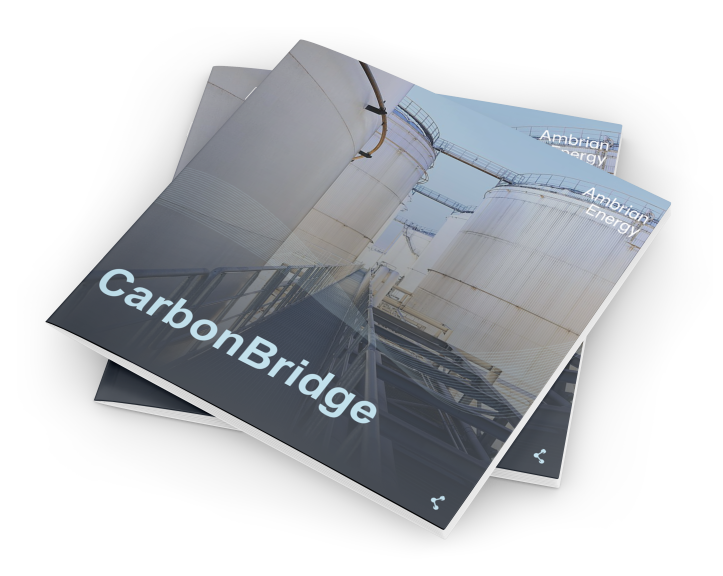
All the Details in One Brochure
Get all the key facts via email in one place: Our project brochure provides a comprehensive overview of CarbonBridge — from concept to logistics, timeline, and impact.
Get in touch
Do you have questions or want to explore a partnership? Feel free to reach out via our form — we’ll get back to you as soon as possible.